11
UN Sustainable Development Goal
SDG 11: Sustainable Cities and Communities
Urban systems, mobility, housing, resilience and inclusive communities.
StoneComms uses the UN Sustainable Development Goals as an editorial classification framework. Relevance does not imply UN affiliation, endorsement or measured impact.
← Browse all researchResearch linked to this goal
Urban Water Utilities in Africa: Reducing Non-Revenue Water to Finance Reliable Service
Africa's urban water challenge is often described as a shortage of dams, treatment works and capital. Those constraints are real. But water already produced is also disappearing through leaking pipes, inaccurate meters, illegal connections and weak billing before it can sustain either households or utilities. Kenya's regulator reports that non-revenue water rose to 48 per cent in 2024/25; a 2026 World Bank programme found losses above 45 per cent among all 18 participating Southern African utilities. This paper asks when loss reduction becomes more than a technical repair programme: when can it become the operating platform for reliable service, fairer access and credible long-term finance?
Read research →Green-Certified Offices in Africa: Testing the Investment Case for Efficiency, Occupancy and Asset Resilience
Across several African office markets, the divide between prime, efficient buildings and ageing secondary stock is widening. South Africa now provides a decade of evidence that green-certified offices can outperform comparable conventional assets, while newer evidence from Botswana and other markets points to stronger occupier demand for resilient, resource-efficient space. The investment question is moving beyond whether sustainability costs more to whether inefficient buildings increasingly carry an obsolescence penalty.
Read research →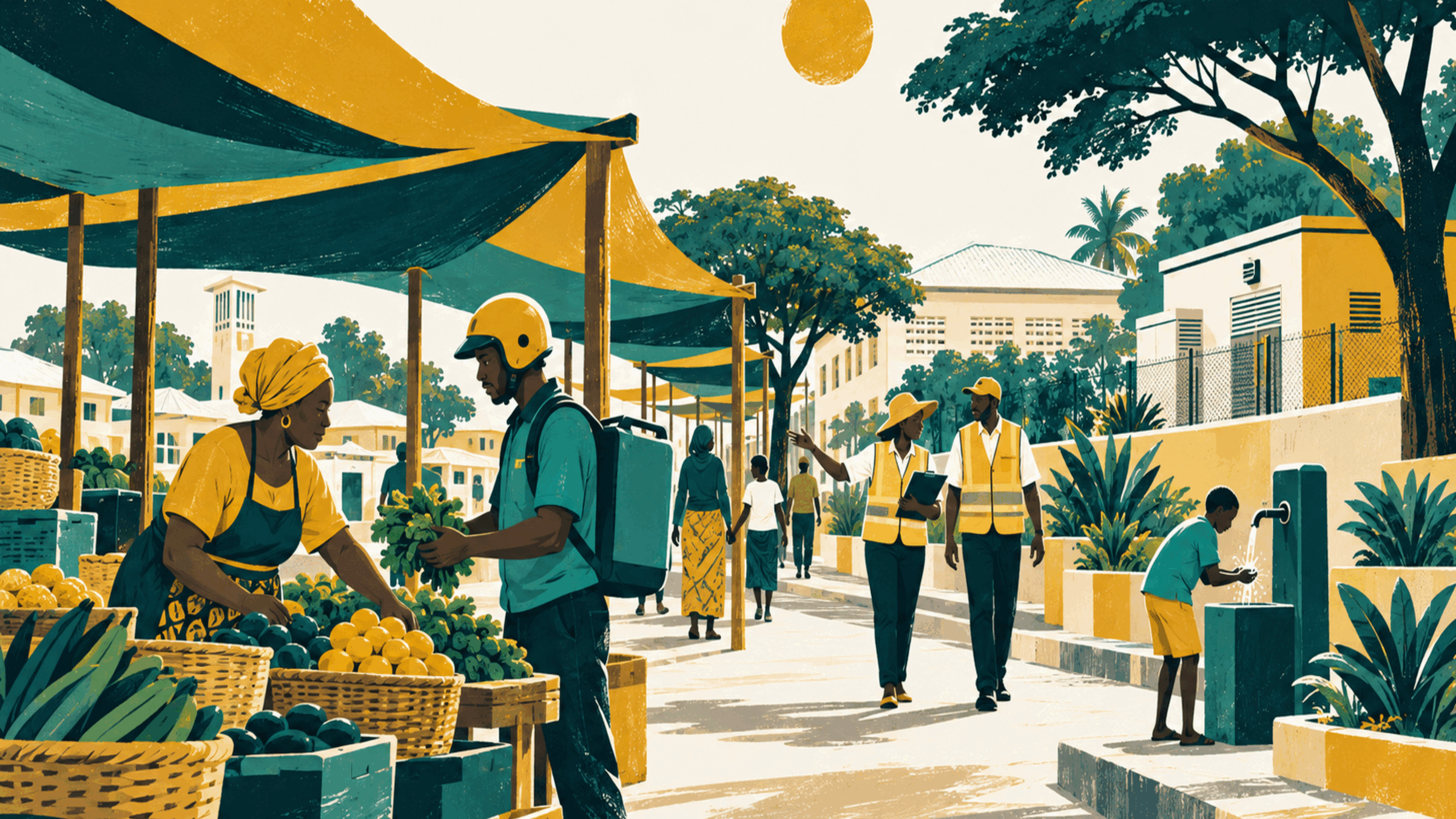
Climate-Risk Data for African Infrastructure: From Hazard Mapping to Investable Resilience
Africa is gaining sharper maps of heat, flood and drought just as its cities make decisions that will shape exposure for decades. But a hazard map does not become a safer market, road, substation or neighbourhood by itself. The missing infrastructure is the chain that converts climate evidence into a named decision, an accountable owner, a financed intervention and a measured result. StoneComms proposes a Decision-Ready Climate Record for making that chain visible.
Read research →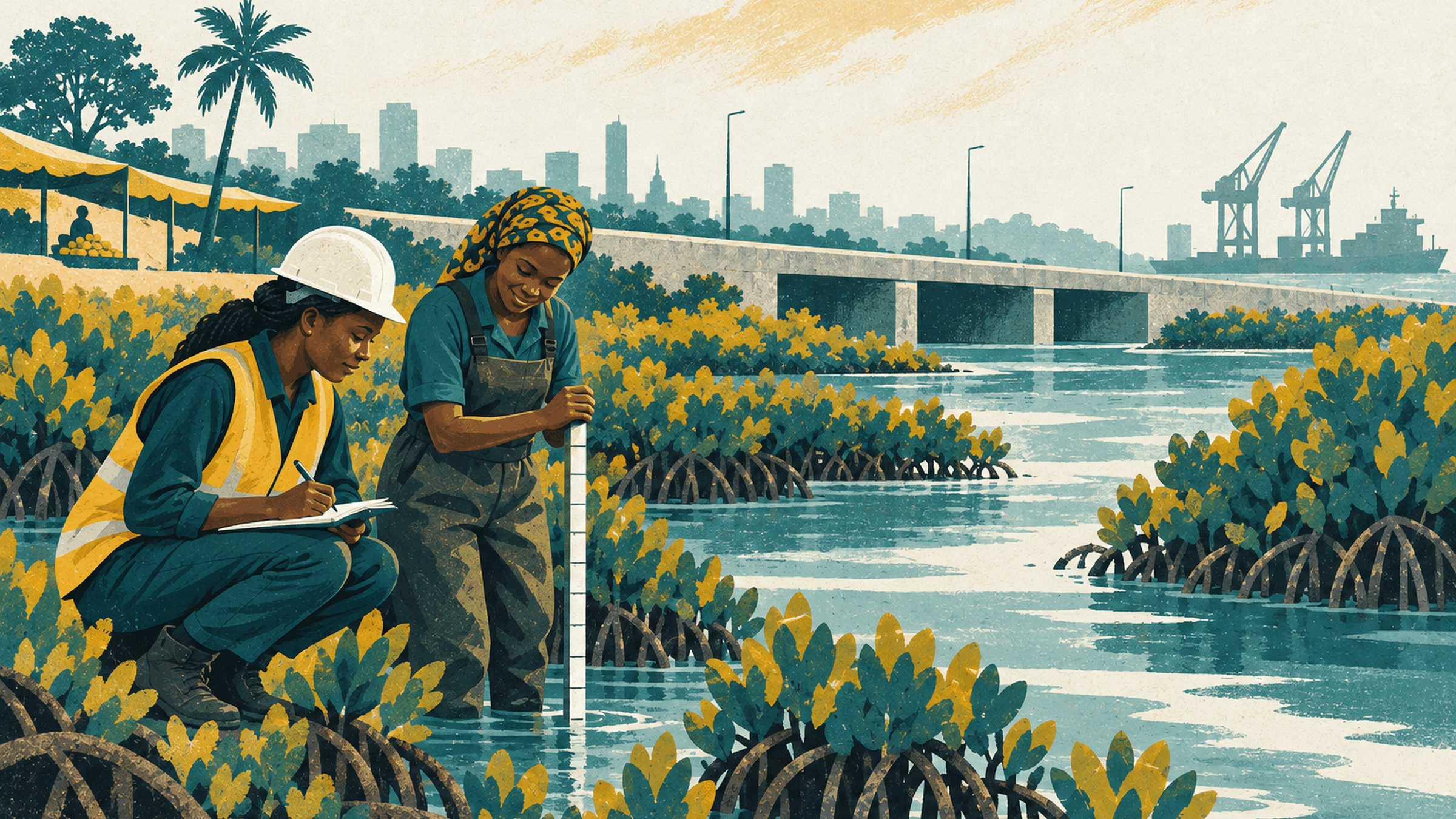
Nature-Based Infrastructure in Africa: Financing, Maintenance and Resilience Performance
Mangroves, wetlands, floodplains and urban green space can protect ports, roads, drainage systems and communities. Yet they are still commonly treated as environmental additions rather than working infrastructure. New African evidence makes the opportunity clearer - and exposes the institutional gap. StoneComms proposes a Living Infrastructure Contract for turning ecological protection into a financeable, maintained and accountable public service.
Read research →.png)
Kenya's Battery-Swapping Market: Interoperability, Regulation and Investment Implications
Kenya has entered a rare policy window: electric mobility is scaling quickly, battery swapping is becoming infrastructure rather than a product feature, and the legal framework is still being written. The strategic question is not whether one battery should win. It is which interfaces must be shared before proprietary networks become expensive to unwind.
Read research →