STONECOMMS
RESEARCH AND INTELLIGENCE
StoneComms research repository
Research, evidence and original synthesis.
Independent research examining the systems shaping Africa’s climate economy, with sources, limitations and methodology kept visible.
StoneComms research repository
Independent research examining the systems shaping Africa’s climate economy, with sources, limitations and methodology kept visible.
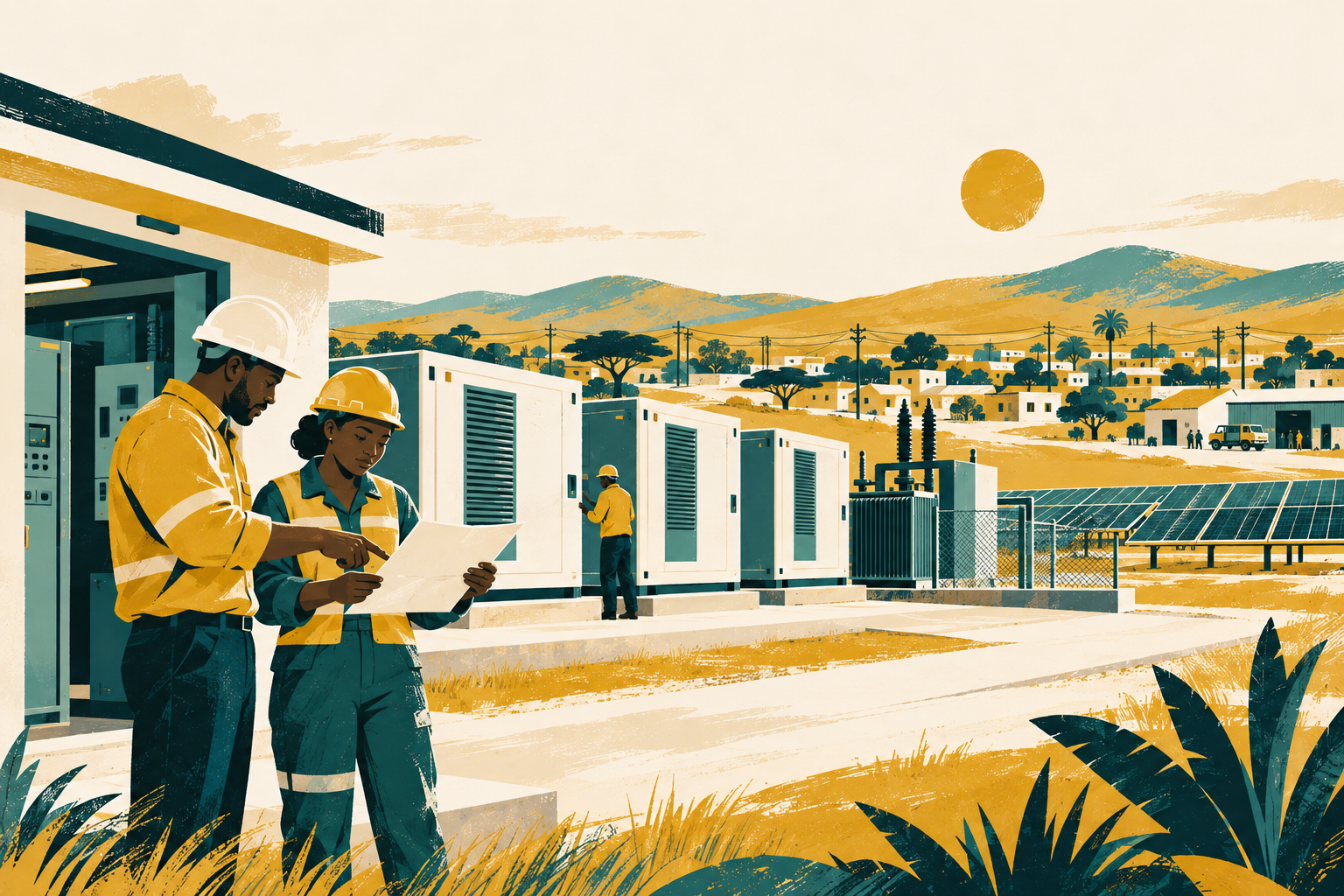
Africa's battery-storage opportunity is becoming more concrete, but installed capacity is an incomplete measure of progress. South Africa's October procurement announcement prioritises storage services; Egypt's Obelisk solar-and-storage complex reached full commercial operation in August; Senegal's Walo project provides a distinct grid-support model. StoneComms examines the institutional machinery that converts stored electricity into reliable service: a defined system need, a suitable location, enforceable dispatch rights, durable payments and funded lifetime performance.
Read research →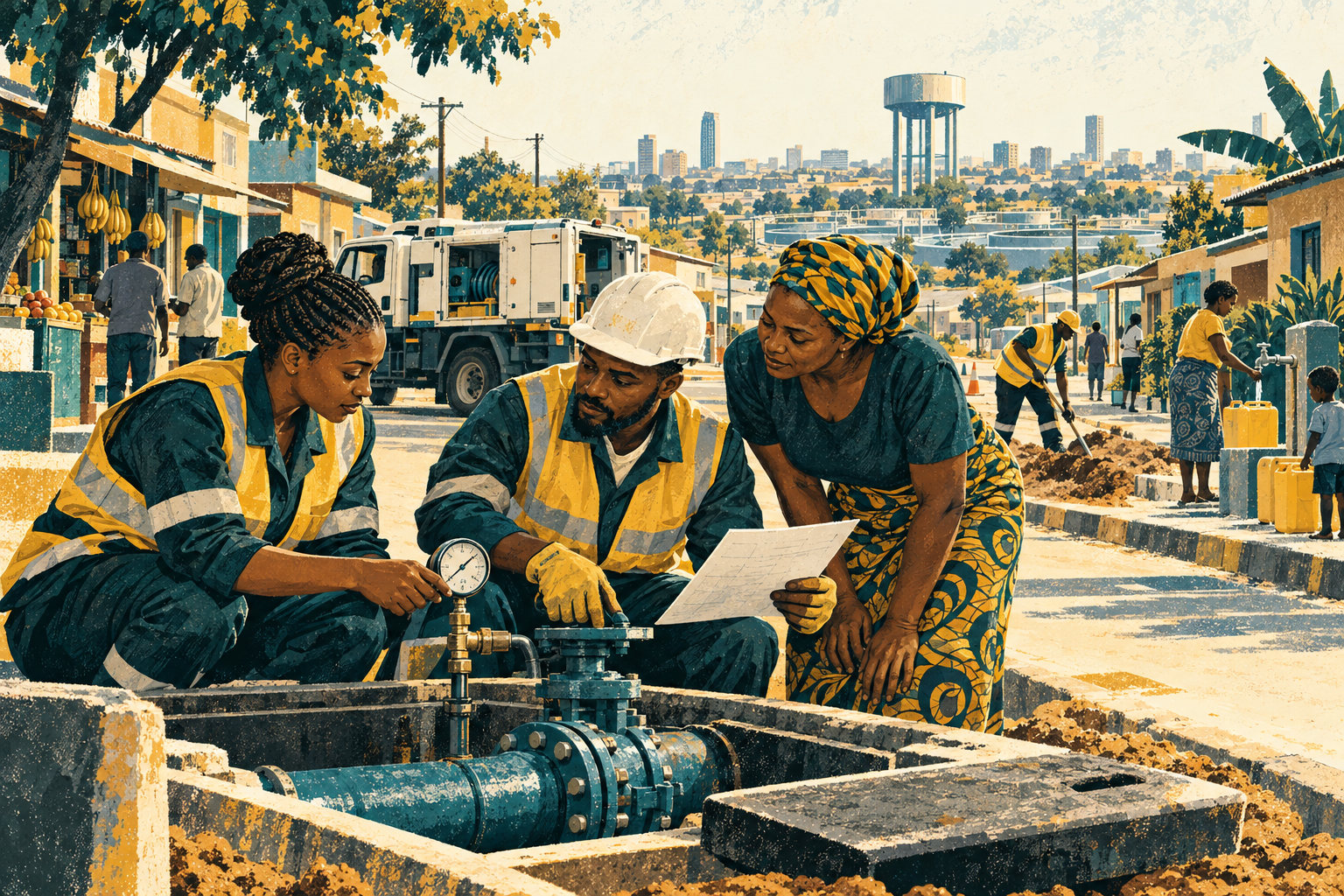
Africa's urban water challenge is often described as a shortage of dams, treatment works and capital. Those constraints are real. But water already produced is also disappearing through leaking pipes, inaccurate meters, illegal connections and weak billing before it can sustain either households or utilities. Kenya's regulator reports that non-revenue water rose to 48 per cent in 2024/25; a 2026 World Bank programme found losses above 45 per cent among all 18 participating Southern African utilities. This paper asks when loss reduction becomes more than a technical repair programme: when can it become the operating platform for reliable service, fairer access and credible long-term finance?
Read research →
Africa does not lack announcements about private capital. It lacks enough projects whose risks are allocated, priced, monitored and disclosed well enough for private capital to stay. A new €500 million financing for Benin, South Africa's planned infrastructure credit-guarantee vehicle, Nigeria's InfraCredit model and a multi-country renewable-energy guarantee framework show four different ways public institutions can strengthen a transaction. StoneComms examines when guarantees create additional investment - and when they simply replace visible public borrowing with less visible contingent risk.
Read research →The Global Grids Accelerator and a new IEA technology assessment have placed electricity networks at the centre of the development agenda. For African utilities, however, the highest-value digital investment is rarely the most fashionable one. StoneComms examines how meters, asset records, telemetry, remote control, grid-enhancing technologies and carefully governed AI can reduce losses, improve reliability and make existing networks work harder—without pretending that software can replace new lines, substations or solvent utilities.
Read research →
Across several African office markets, the divide between prime, efficient buildings and ageing secondary stock is widening. South Africa now provides a decade of evidence that green-certified offices can outperform comparable conventional assets, while newer evidence from Botswana and other markets points to stronger occupier demand for resilient, resource-efficient space. The investment question is moving beyond whether sustainability costs more to whether inefficient buildings increasingly carry an obsolescence penalty.
Read research →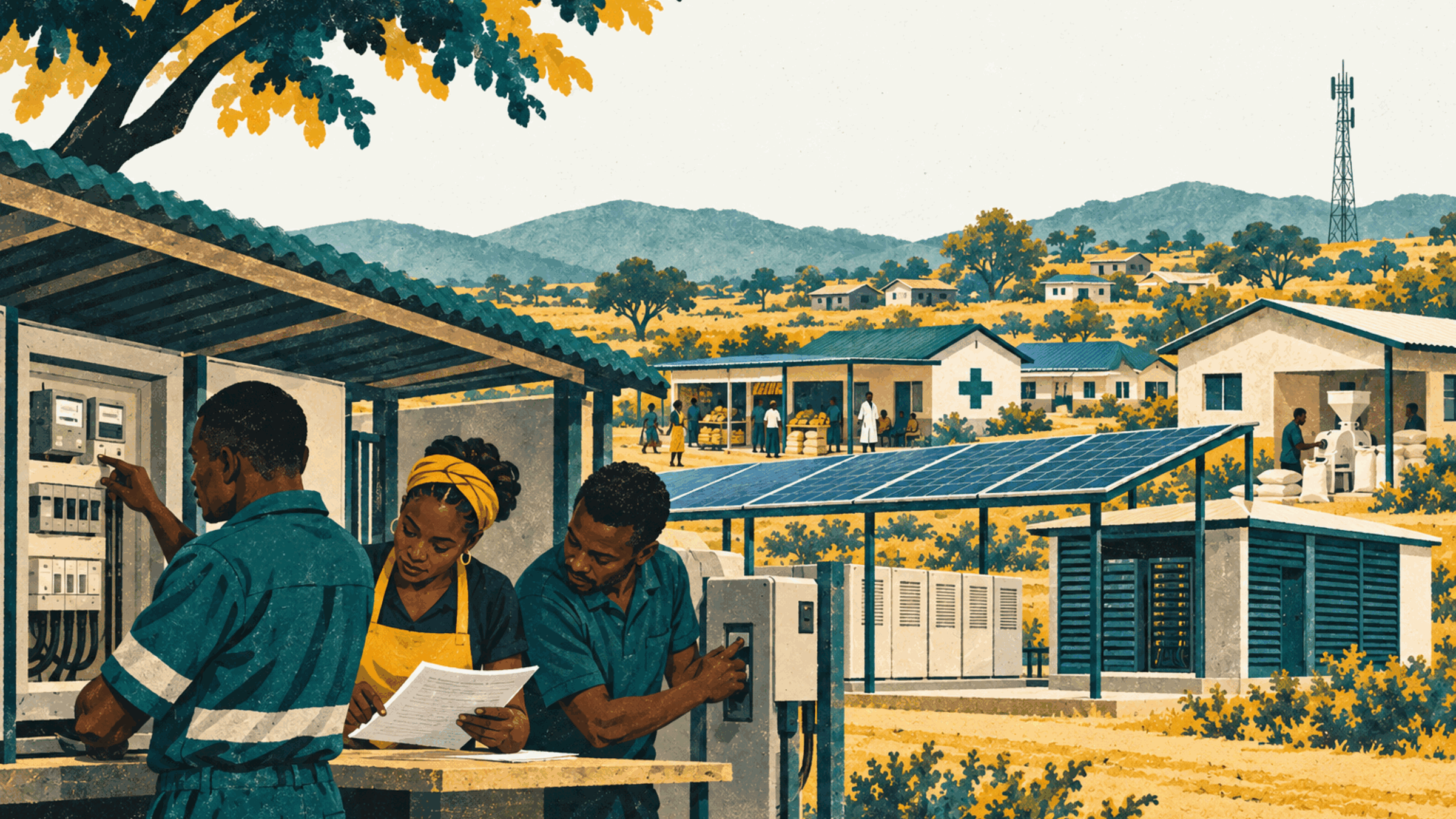
The Emergent Grid demonstration announced on 24 September 2026 asks an unusual infrastructure question. Could small, flexible computing loads buy electricity that African mini-grids are not yet selling, giving the power system steadier revenue while local demand grows? Initial sites in Kenya, the Democratic Republic of Congo and Sierra Leone are projected to serve or strengthen service for approximately 85,000 people. The proposition is promising precisely because it is not yet proven. Its value will depend on whether compute is genuinely interruptible, whether savings reach communities, whether digital revenue is additional, and whether the equipment leaves behind stronger local infrastructure rather than a remote enclave.
Read research →
UNICEF’s September 2026 invitation to 96 prequalified companies creates a rare chance to procure connectivity services for schools and health facilities across all 54 African countries. The scale is arresting: a potential universe of more than 860,000 schools and 260,000 health facilities. The harder question is institutional. Can a contract for internet access become a durable education service—powered, maintained, used by teachers, safe for children and accountable to the public?
Read research →
Africa’s financial institutions already hold substantial domestic savings. Yet infrastructure projects that earn in naira, shillings, rand or CFA francs are still frequently prepared for foreign-currency lenders, short-tenor banks or public balance sheets. New guarantee facilities in Nigeria and East Africa, together with a 2026 West African local-currency facility, show that the missing link is not simply money. It is the machinery that turns projects into assets pension trustees can prudently buy.
Read research →
Submarine cables have redrawn Africa's connectivity map. The next investment test is whether bandwidth can leave the landing station, be exchanged and processed locally, reach firms at a competitive price, and support work that generates income. Djibouti's exceptional cable position shows why geography creates an option—not an outcome.
Read research →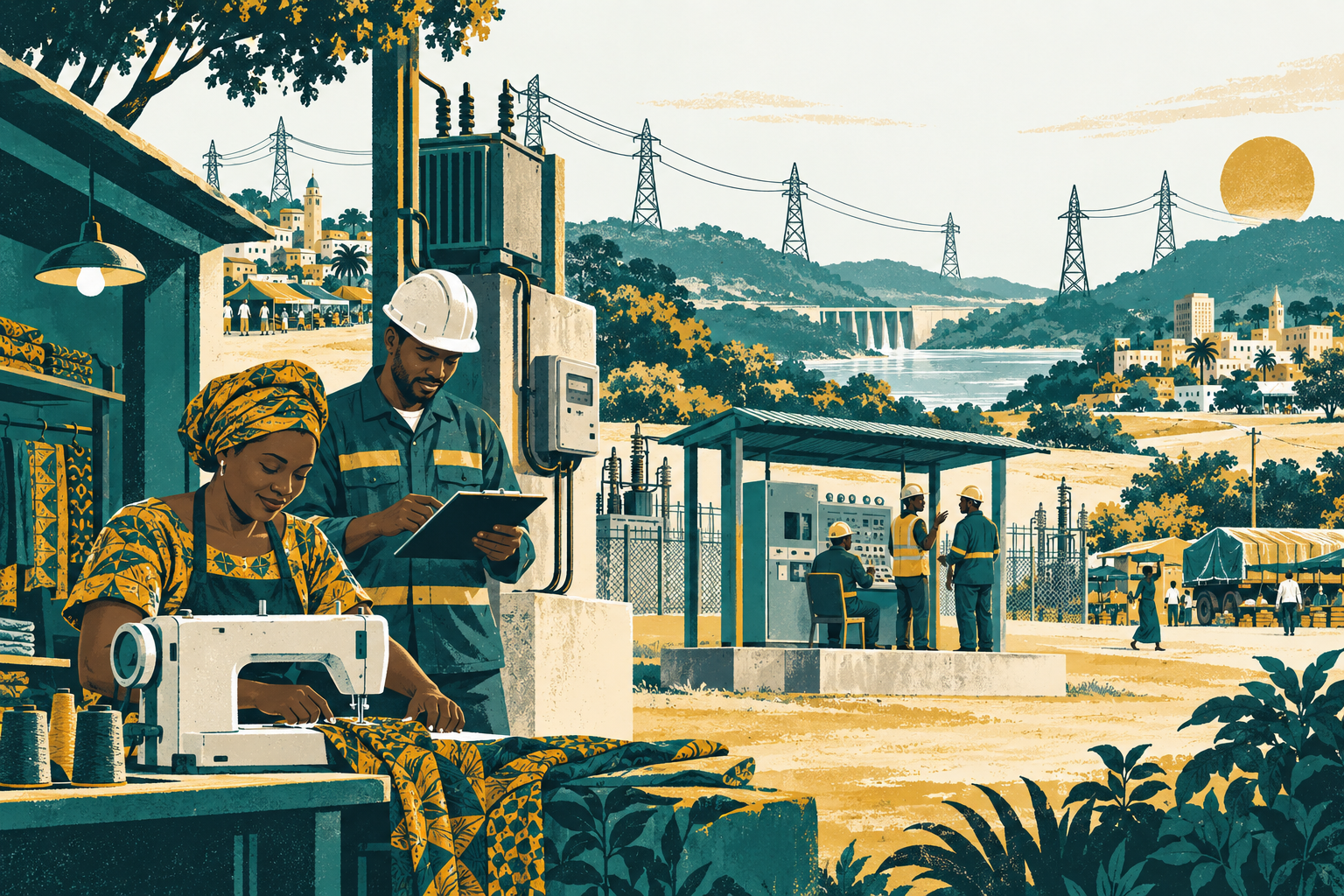
Africa is joining national grids into regional power systems. The next test is whether electricity can move through them reliably, be paid for, and reach the people and firms whose demand justified the investment. StoneComms examines the missing span between an interconnector's completion and a functioning market.
Read research →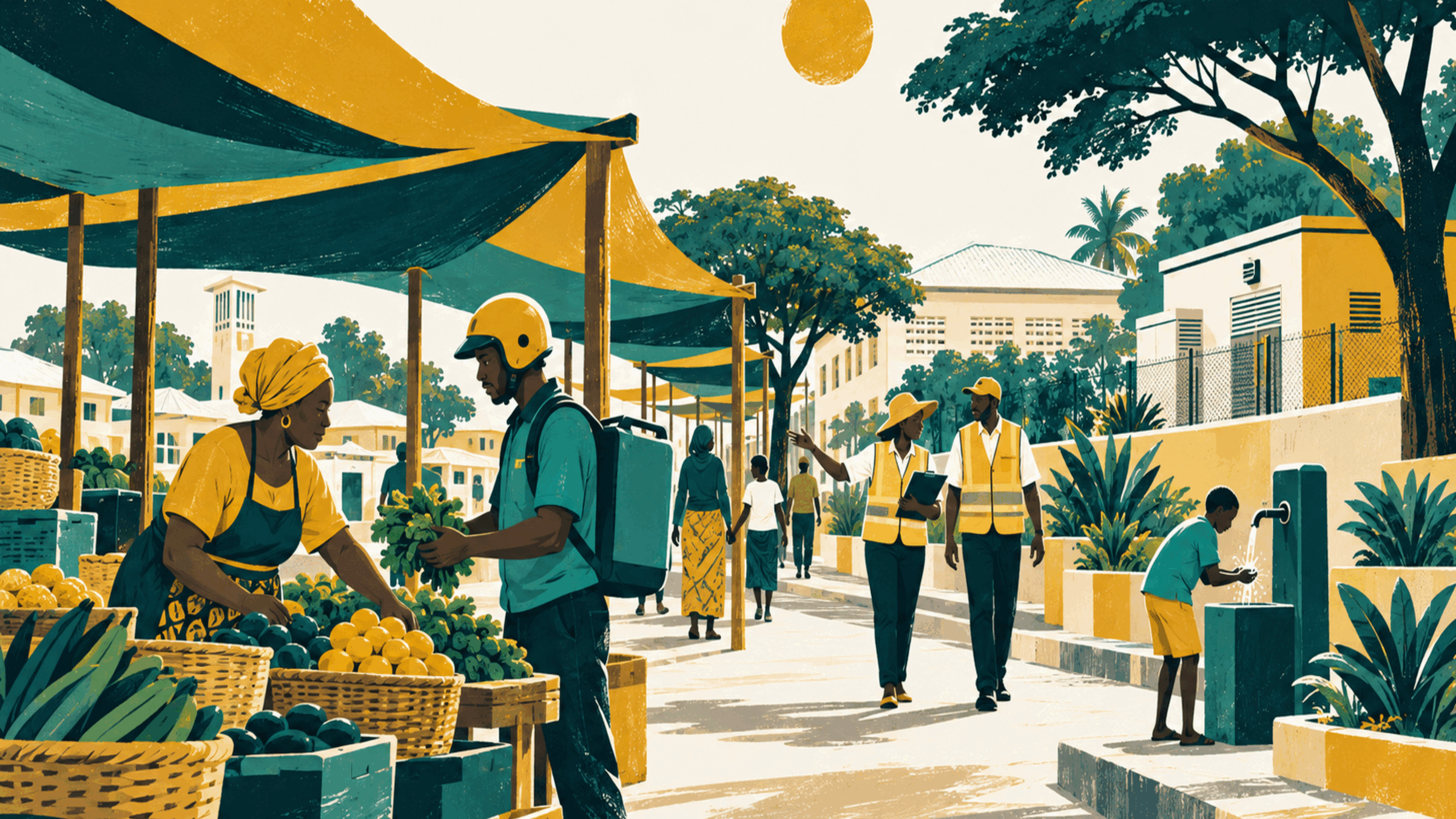
Africa is gaining sharper maps of heat, flood and drought just as its cities make decisions that will shape exposure for decades. But a hazard map does not become a safer market, road, substation or neighbourhood by itself. The missing infrastructure is the chain that converts climate evidence into a named decision, an accountable owner, a financed intervention and a measured result. StoneComms proposes a Decision-Ready Climate Record for making that chain visible.
Read research →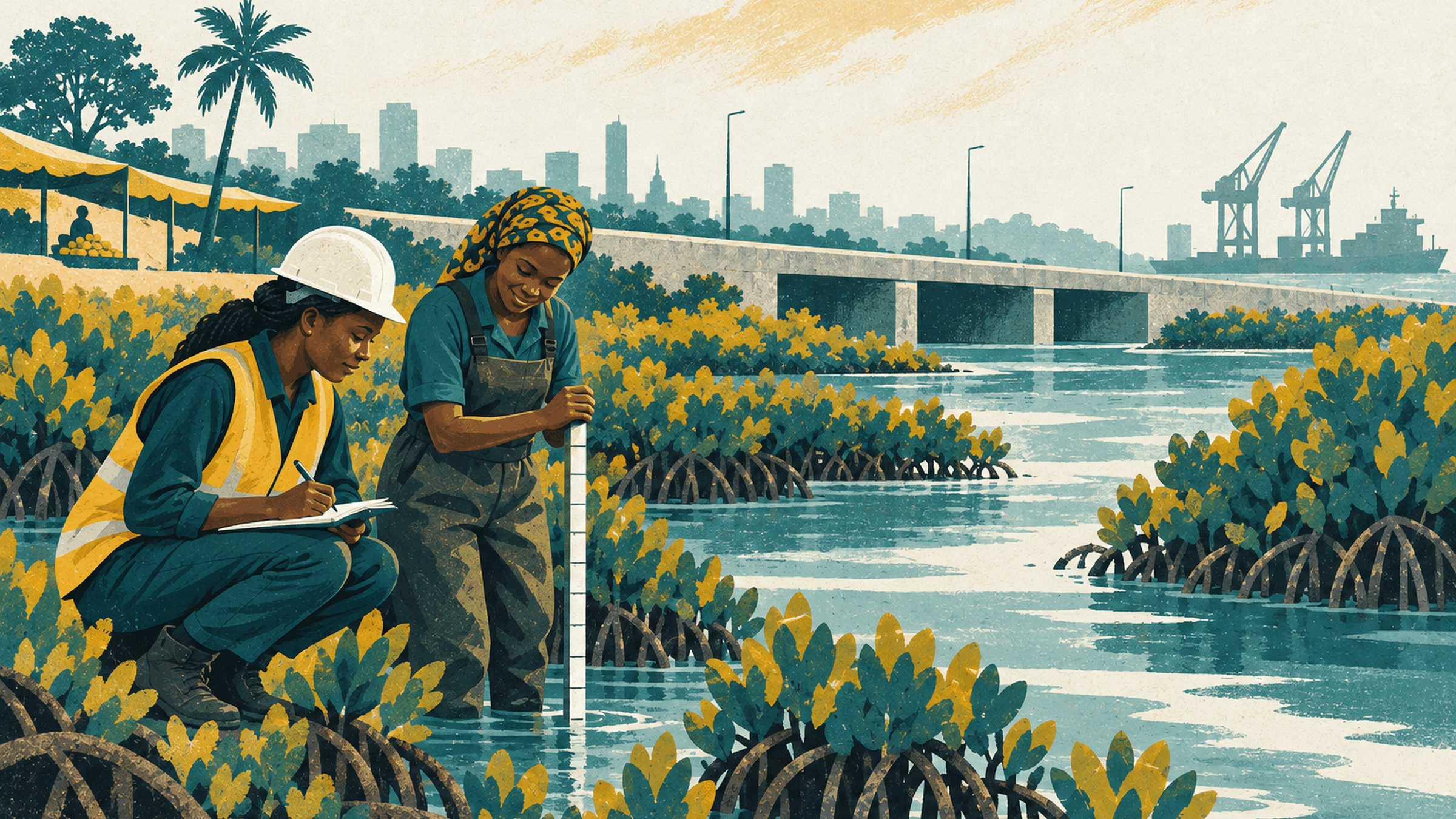
Mangroves, wetlands, floodplains and urban green space can protect ports, roads, drainage systems and communities. Yet they are still commonly treated as environmental additions rather than working infrastructure. New African evidence makes the opportunity clearer - and exposes the institutional gap. StoneComms proposes a Living Infrastructure Contract for turning ecological protection into a financeable, maintained and accountable public service.
Read research →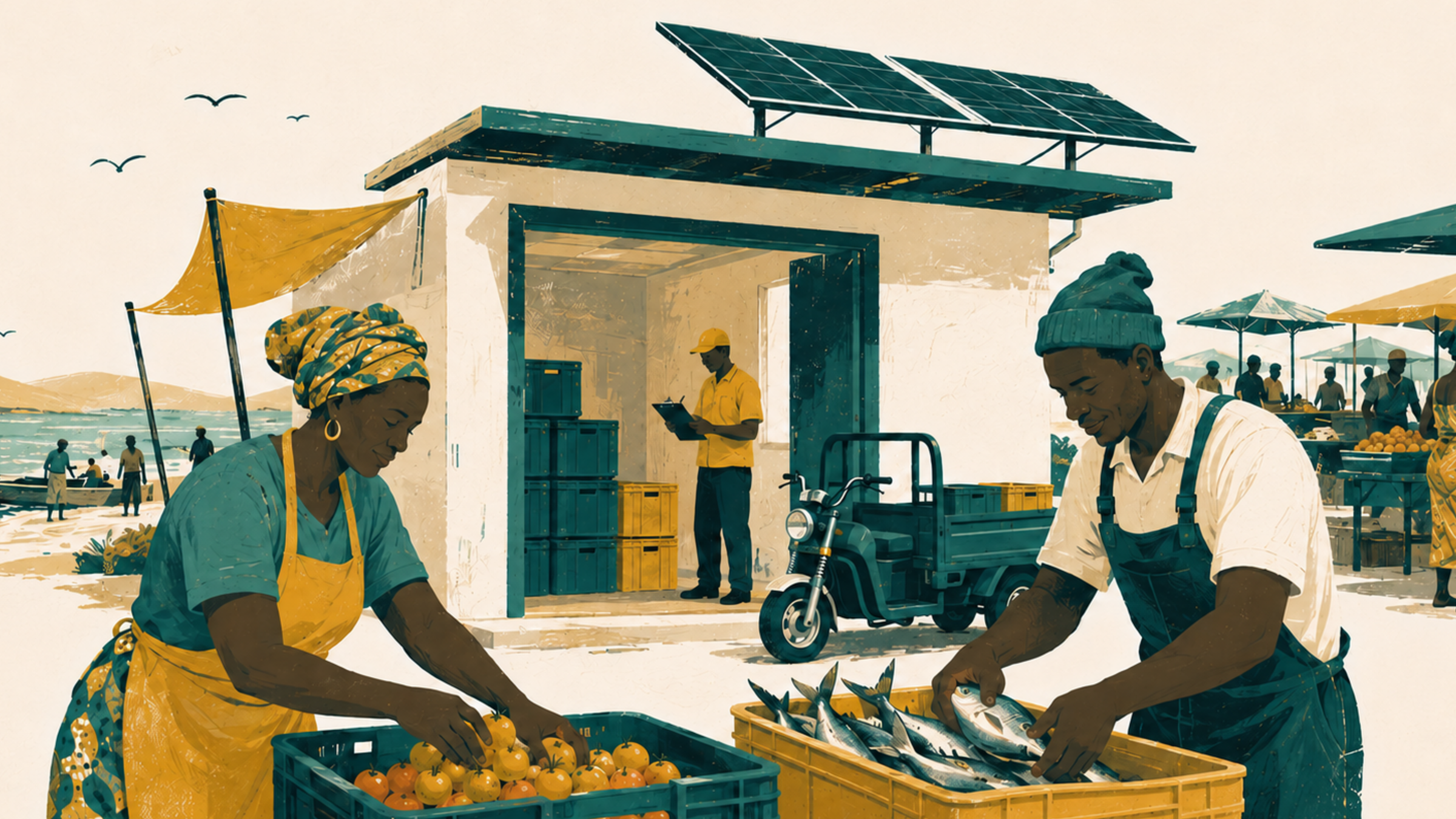
Africa does not only lose food because it lacks refrigerated rooms and vehicles. It loses value because farmers, fishers and traders often cannot buy reliable time: a few extra hours to aggregate, grade, negotiate and reach a better market. New 2026 evidence makes the scale of the opportunity clearer, while underused facilities show why hardware-led programmes fail. StoneComms proposes a Cold-Chain Service Test for turning cooling assets into durable market infrastructure.
Read research →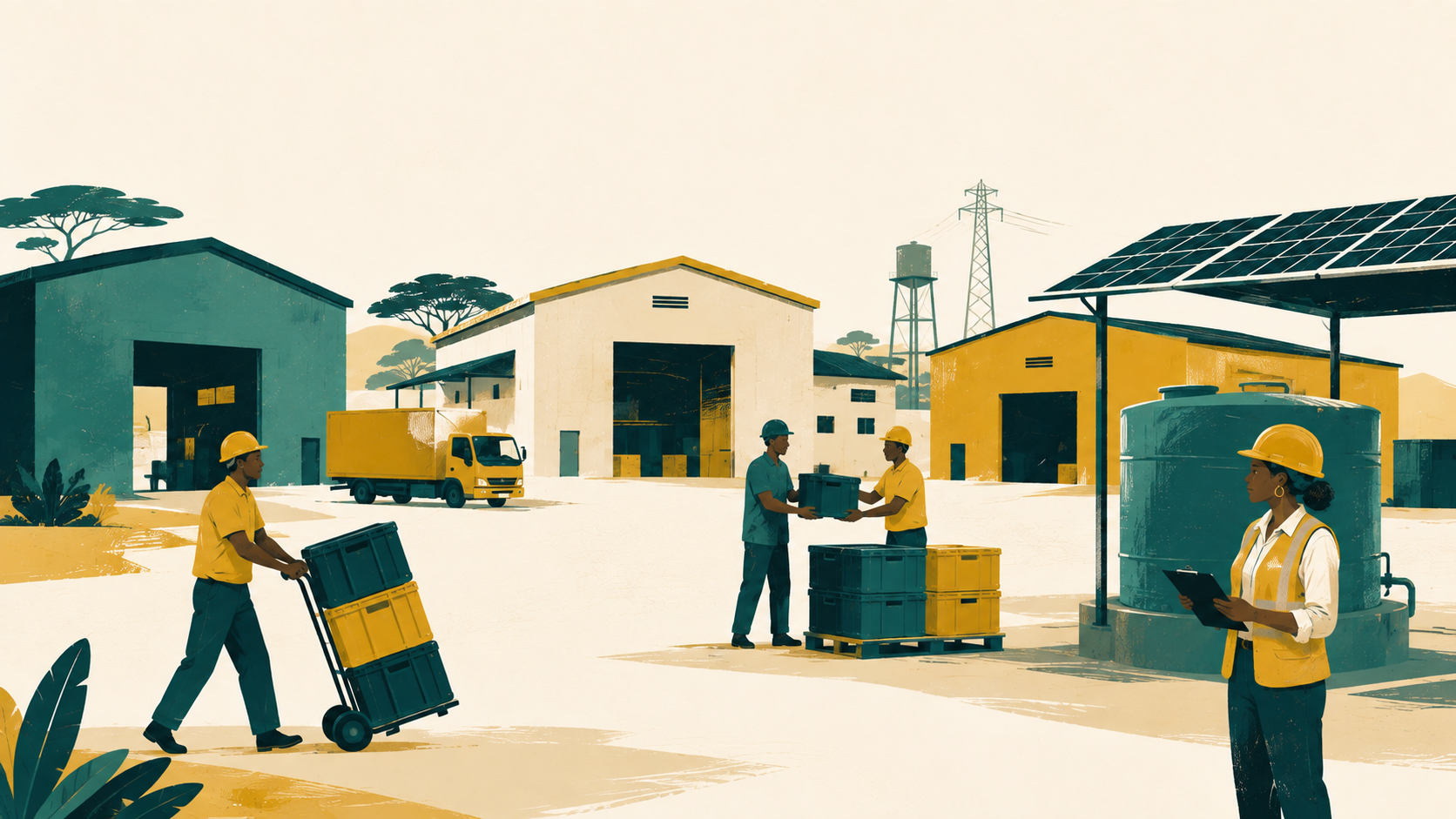
Rwanda is preparing to expand its industrial parks while studying how Korea turned waste heat, wastewater and by-products into competitive infrastructure. The lesson is larger than circular economy. Africa's zones can lower production costs, improve resilience and satisfy tougher export standards if park operators are equipped to measure, match, contract and finance exchanges between firms. StoneComms proposes a Symbiosis Readiness Test for deciding where that promise is commercially real - and where it is still decorative.
Read research →
Africa’s clean-cooking push is finally attracting serious money and delivering record gains. It is also concentrating risk. Liquefied petroleum gas now provides more than 70 per cent of the continent’s clean-cooking access, captured nearly half of recent summit disbursements, and remains exposed to imported-fuel prices and maritime chokepoints. The answer is not to retreat from LPG. It is to judge every clean-cooking pathway by whether households can keep using it when prices, suppliers or projects fail.
Read research →
Africa's women-business finance market is attracting smarter capital, from first-loss guarantees in Kenya to dedicated credit lines and guarantee platforms across the continent. But the latest institutional evidence points to a deeper constraint: capital cannot reach firms that remain difficult to identify, register, assess, collateralise, serve and connect to markets. StoneComms proposes a Financeability Stack that treats those preconditions as investable infrastructure rather than side projects.
Read research →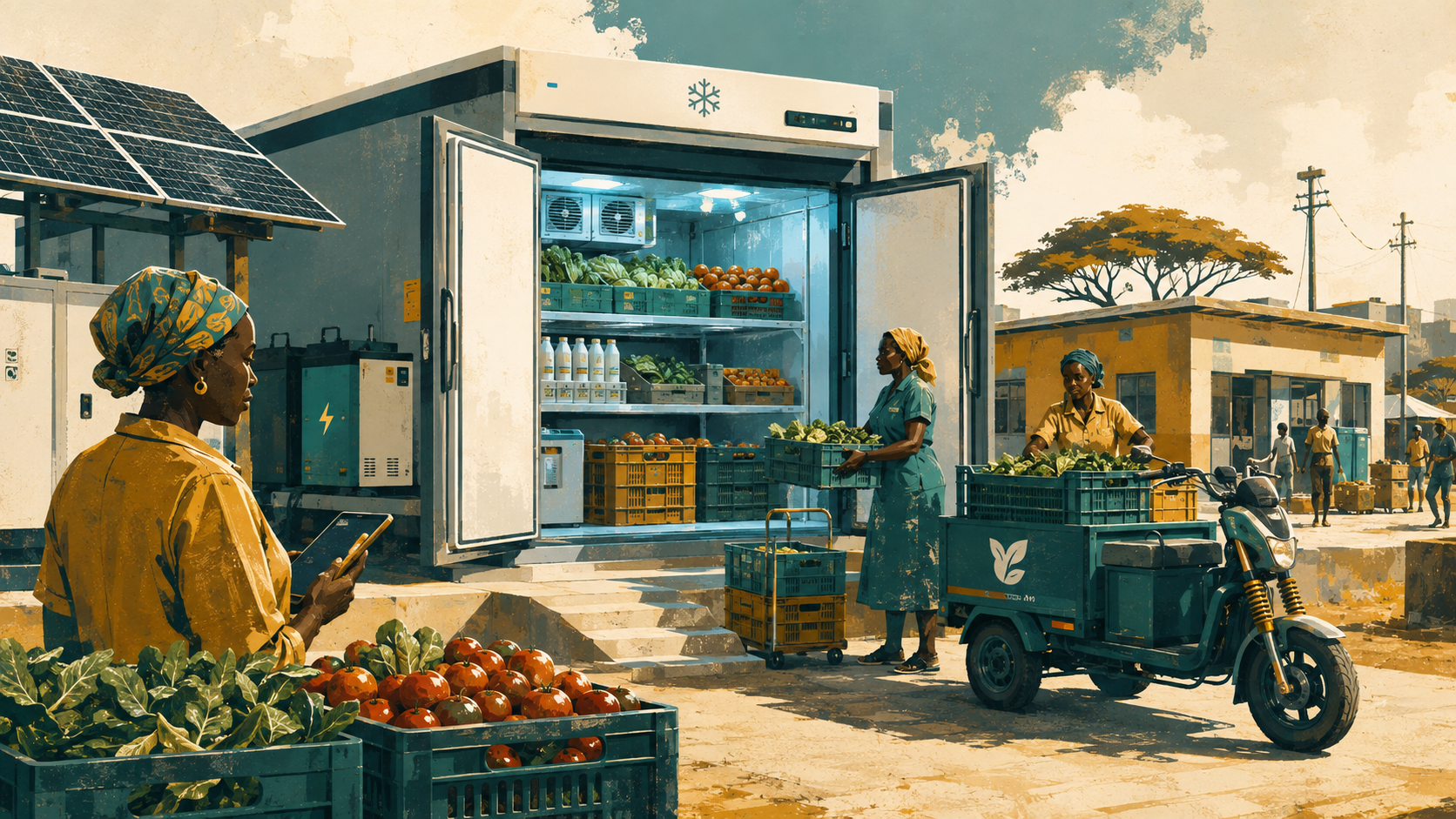
Mission 300 is accelerating electricity connections across Africa. The next challenge is making those connections economically durable. StoneComms finds that farms, small businesses, clinics, schools, cold chains and mobility can do more than benefit from electricity: they can become the anchor loads that improve the economics of distributed power itself.
Read research →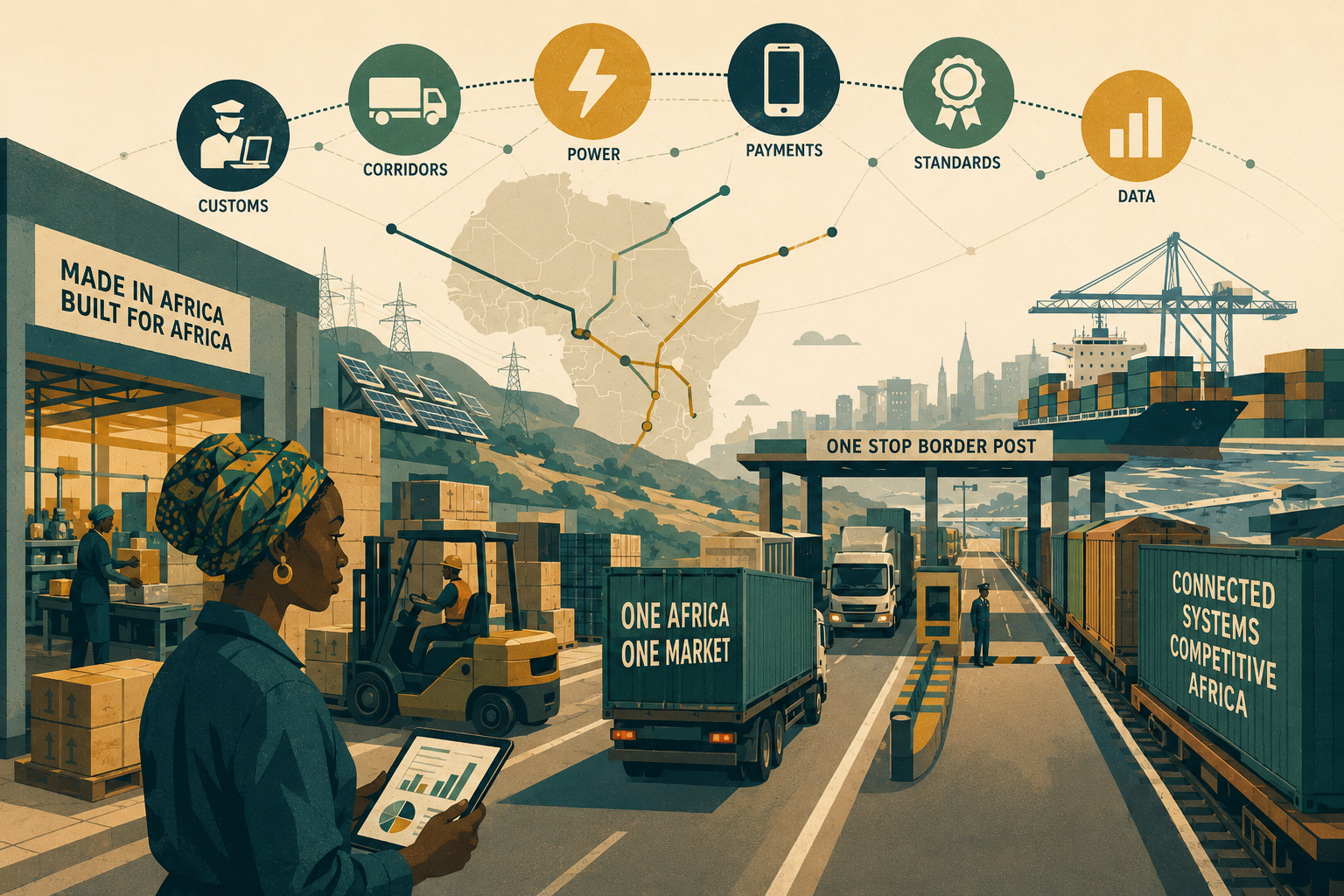
Africa has built the legal architecture for a continental market. The harder task is making the systems firms use every day work across borders. StoneComms tests that challenge against live reforms in East, West, Central and Southern Africa and finds a practical investment implication: regional infrastructure should be financed as an operating system, not a collection of assets.
Read research →.png)
Kenya has entered a rare policy window: electric mobility is scaling quickly, battery swapping is becoming infrastructure rather than a product feature, and the legal framework is still being written. The strategic question is not whether one battery should win. It is which interfaces must be shared before proprietary networks become expensive to unwind.
Read research →